Incident and collision investigation for Alberta carriers
A collision lands on your carrier profile automatically, with points attached. Whether those points stay there often comes down to whether anyone investigated properly at the time.
The report you write after a collision decides what it costs you
Every reported collision involving an NSC vehicle registered to you appears on your carrier profile. It arrives with points attached, and those points feed the monitoring that decides whether the province escalates to a warning letter, a required safety plan or a full facility audit.
Alberta does let you challenge it. A carrier can apply for a collision review within twelve months of the collision date, and where the review succeeds the collision stays visible on the profile but carries no points against you. The application has requirements though. Alberta asks for a signed driver statement, your correspondence with your insurer about the claim, and your own internal collision investigation report.
That last item is where most carriers lose. If nobody investigated at the time there is no report to submit, and by the time the points show up the evidence needed to build one has gone. The scene is cleared, the telematics data has rolled off, the dashcam has overwritten itself and the independent witness is not answering the phone. The collision keeps its points because of a filing failure, not because the driver was at fault.
An investigation done properly in the first week protects you three ways at once. It preserves the evidence that a collision review needs, it satisfies the records an auditor will ask to see, and it tells you what actually went wrong while you can still fix it.
What an investigation covers
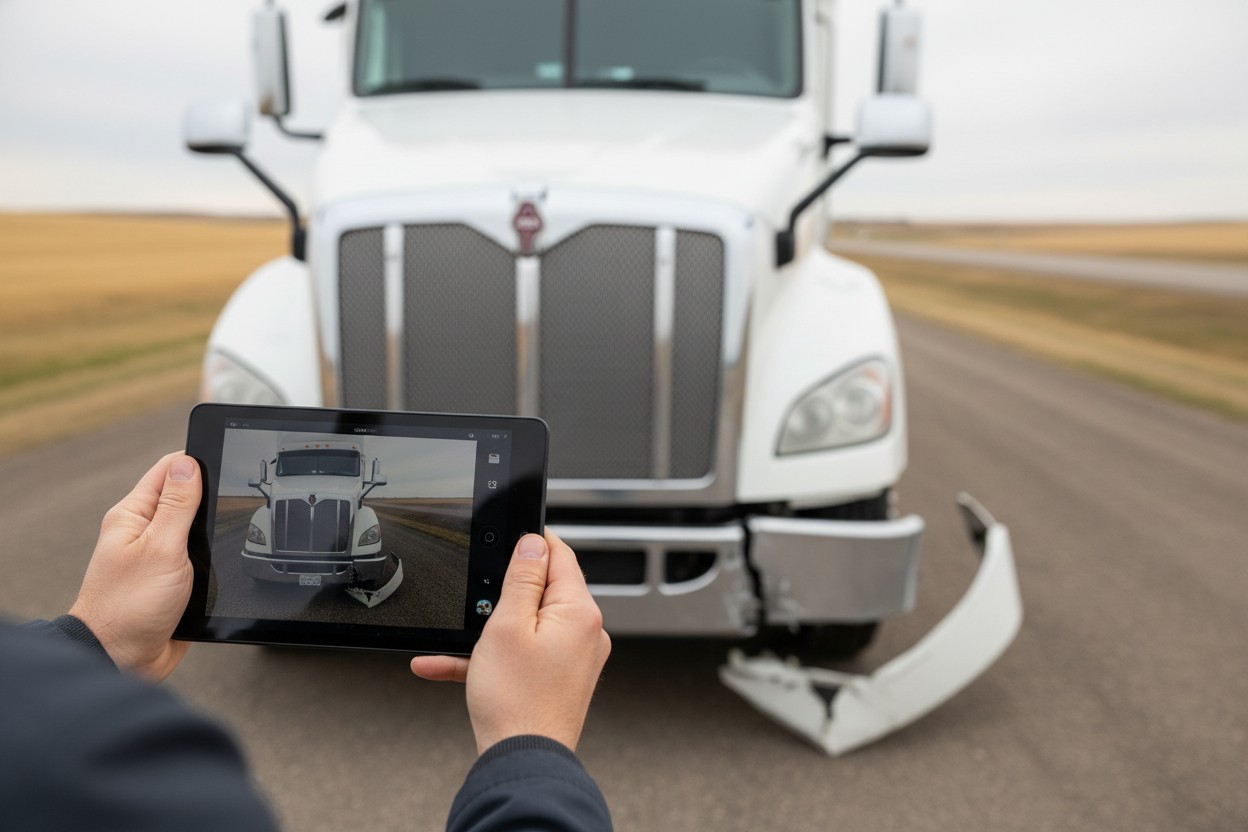
- Evidence preservation, immediately. Telematics and ELD data, dashcam footage, photographs, the police file number and the physical evidence that stops existing within days of the event.
- Driver and witness statements. Taken early and in writing, while recall is still reliable and before the account has been shaped by an insurance claim.
- Vehicle condition and history. Post collision inspection findings, brake and tire condition, the maintenance and defect reporting history behind that unit, and whether any of it contributed.
- Driver factors. Hours of service in the days before the event, licence class and status, medical status, training records, and whether the driver was qualified for the task they were given.
- A preventability assessment. An honest determination against the standard the province and your insurer actually apply: could a reasonable, well trained driver obeying the rules and using ordinary care have avoided this.
- Root cause, not just immediate cause. The driver error or the equipment failure is where most investigations stop. That only ever produces a corrective action aimed at a symptom. The useful investigation carries on to the management system that allowed the immediate cause to exist.
- A corrective action plan. Specific, assigned to a person, dated and verifiable. Retrained the driver is not a corrective action an auditor will accept on its own.
- Your reporting obligations, mapped. Which reports are due, to whom and by when, across both the transport requirements and the occupational health and safety requirements that apply to the same event.
One event, two sets of obligations.
A collision that injures your driver is both a transport matter and a workplace health and safety matter. They are separate regimes, with separate reporting routes, separate deadlines and separate consequences for getting it wrong.
On the transport side, the collision goes to your carrier profile and the record of it belongs in the driver's file, which Alberta requires you to keep for the current year and the four calendar years after it. On the occupational health and safety side, a serious injury triggers an immediate reporting duty, and both serious incidents and potentially serious incidents carry a duty to investigate, to produce a written report with corrective actions, and to keep that report available afterwards.
Most carriers handle whichever side they are used to and are genuinely surprised by the other. The failures are rarely refusals. They are a report filed in one place and nowhere else, or an investigation that satisfied the insurer and was never written up in the form either regulator expects.
If something has just happened
Deal with the immediate reporting duties first, then call. Do not wait for the claim to settle before starting the investigation. By then the evidence that would have supported a collision review, and the detail that would have made the corrective action worth anything, is usually gone.
How an investigation runs
The first call
Ideally within hours, because the first decisions are about preservation. What to pull before it overwrites, what to photograph before the unit is repaired, what to put in writing today. This part is time critical and it is free to get right.
Evidence capture
Telematics and ELD downloads, dashcam footage, maintenance and defect history for the unit, the driver's file and hours of service for the preceding days, and the police and insurer paperwork as it arrives.
Interviews
The driver first, then any witnesses and any employee involved in dispatching, loading or maintaining the unit. Structured, documented, and focused on sequence rather than blame.
Analysis
The sequence of events is reconstructed and traced back through its causal chain, separating what happened from why it was able to happen. Preventability is assessed against the standard that will actually be applied to it.
The report
A written investigation report in the form an auditor, an inspector and a collision review officer each expect to see, with the evidence attached and the findings stated plainly.
Corrective action and follow up
A prioritised fix list aimed at the root causes, and a re check later to confirm the change held rather than lapsed once attention moved on.
Common questions
When does a collision have to be reported in Alberta?
Since the start of 2024 the property damage threshold is $5,000, and it is assessed on the combined damage to everything involved, not just to your unit. Any collision involving an injury or a fatality is reportable regardless of the damage figure. Reportable collisions involving your NSC vehicles flow onto your carrier profile, so the reporting threshold and the profile threshold now line up.
Can you get a collision removed from our carrier profile?
The points can be removed, and the collision itself stays visible with no points attached. Alberta accepts applications for collision review within twelve months of the collision date, from the carrier directly or from a consultant acting for the carrier. The application needs a signed driver statement, your internal investigation report and your insurance correspondence. Reviews can take several months, so this is not a lever to pull the week before an audit.
Do we need to investigate near misses as well?
Yes, and this catches carriers out. Alberta's occupational health and safety legislation requires employers to investigate and report potentially serious incidents: events that did not injure anyone this time, but that a reasonable person would say had a high likelihood of serious injury under slightly different circumstances. A near miss involving a commercial vehicle very often meets that description.
Our insurer is already investigating. Is that not enough?
No, and the distinction matters. An insurance investigation exists to settle liability and decide what gets paid. It is not written to satisfy your record keeping obligations, it does not produce a corrective action plan, and it belongs to the insurer rather than to you. Carriers regularly discover at audit that they have a claim file and no investigation report, which is not the same thing.
The driver was clearly at fault. Is an investigation still worth it?
Yes, for two reasons. An audit examines whether you investigate incidents at all, not whether you were blameless in any particular one, so the absence of a report is itself the finding. And a clear driver error still has something behind it: a scheduling practice, a training gap, a hiring decision, a piece of equipment. Fixing that is the only thing that stops the next one.
How quickly do you need to be involved?
The sooner the better, and the first few days matter far more than the rest. Evidence decays fast and some of it deletes itself on a schedule. If something has just happened, call before you do anything else, even if you have not decided whether to engage anyone.
Other services
NSC Audits
Facility audits and new carrier compliance reviews
Learn moreCOR Audits
Certificate of Recognition audits through AMTA, certification to renewal
Learn moreLog Auditing
Hours of service, daily logs and ELD records
Learn moreMaintenance Reviews
NSC Standard 11 and 11B, CVIP and repair records
Learn moreCarrier Profile Services
Read it, fix it, and keep it out of the intervention range
Learn moreCommercial Driver Training
Practical training that stands up in an audit
Learn more
Book this review before the province books one for you.
A short scope call costs nothing and usually tells you straight away whether you have a problem worth paying to fix.