Commercial driver training that stands up in an audit
Training delivered by someone who audits training records for a living, so the certificate in the file is the certificate an auditor will accept.
Training is a compliance record, not just a good idea
Most carriers treat driver training as a safety investment, which it is. What gets missed is that training is also evidence. When an auditor examines a driver qualification file, training records are part of what proves your safety program is real.
This is where generic online courses often fall short. A certificate that does not specify what was covered, does not tie to the standard it addresses, and is not filed against the right driver is a weak piece of evidence. It might satisfy an insurer. It does less for you in an audit.
First Call training is built the other way round. The content is what your drivers actually need, and the record is structured the way an auditor expects to find it.
It is also targeted. Training everyone on everything wastes money. The right approach is to look at what your carrier profile and your log audit are telling you, then train against that.
Training areas
- Hours of service and daily logs. The rules, the cycles, and the log errors that actually generate violations in practice.
- Electronic logging devices. Correct use, edits and annotations, personal conveyance, yard move, and what unassigned driving time means for the driver.
- Trip inspections under NSC Standard 13. How to perform one properly, what must be recorded, and why the report matters after the truck leaves the yard.
- Cargo securement under NSC Standard 10. Working load limits, securement counts and the errors that most often show up at roadside.
- Defensive driving and professional driver improvement, for carriers using training as a response to a collision trend on their profile.
- Compliance orientation for new drivers, so expectations are set on day one and the record starts clean.
- Office and dispatch training, because dispatch pressure causes a large share of hours of service violations and dispatchers are rarely trained on the rules.
How training is delivered
Needs assessment
What does your carrier profile show, what did your log audit find, and where are the actual gaps? Training is scoped against evidence, not sold as a bundle.
Delivery
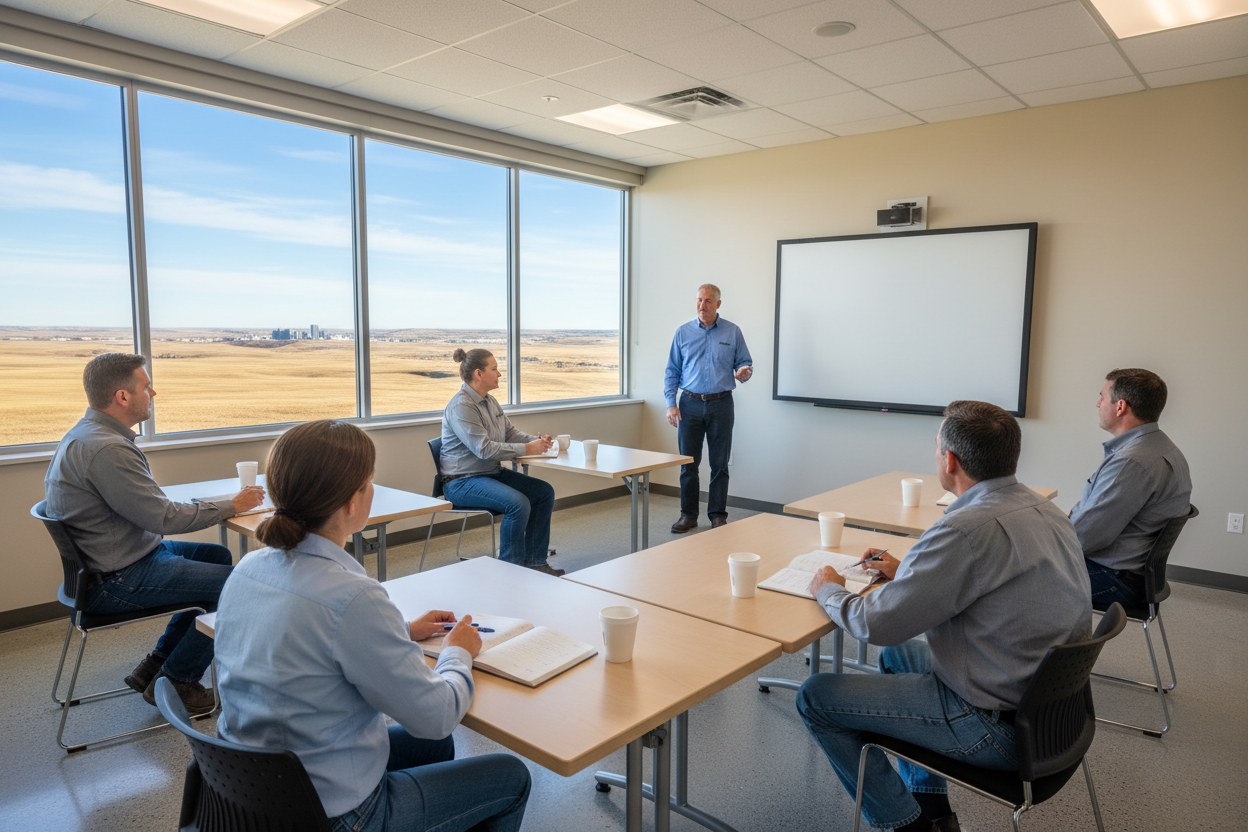
On site at your yard, or remotely for classroom content. Sessions are built around your operation and your equipment rather than generic examples.
Practical work
Where the subject calls for it, training happens at the vehicle. Trip inspections and cargo securement do not transfer well from a slide deck.
Records
Attendance, content covered, assessment and certification, structured and filed so the record holds up when a driver file is examined.
Refresh cycle
A schedule for what needs repeating and when, so training does not quietly expire across the fleet.
Common questions
Do you deliver mandatory entry level training for Class 1?
MELT is delivered by licensed driver training schools under a specific provincial curriculum. First Call training is compliance training for drivers who already hold their licence: hours of service, trip inspections, cargo securement and the areas an audit examines. Ask on the scope call and you will get pointed the right way either way.
Can training be delivered at our yard?
Yes, and for practical subjects it should be. Trip inspection and cargo securement training is far more effective at the vehicle than in a classroom.
How many drivers do you need for a session?
Group sessions are the most cost effective, but small carriers and single driver operations are not turned away. It gets scoped to what you have.
Will the training records satisfy an audit?
That is the design goal, and it is the reason to have training delivered by someone who audits records. Records are structured to show what was covered, who attended, how competence was assessed and when it needs refreshing.
Other services
NSC Audits
Facility audits and new carrier compliance reviews
Learn moreCOR Audits
Certificate of Recognition audits through AMTA, certification to renewal
Learn moreLog Auditing
Hours of service, daily logs and ELD records
Learn moreMaintenance Reviews
NSC Standard 11 and 11B, CVIP and repair records
Learn moreCarrier Profile Services
Read it, fix it, and keep it out of the intervention range
Learn moreIncident Investigation
Collisions and near misses investigated to a standard that holds up
Learn more
Book this review before the province books one for you.
A short scope call costs nothing and usually tells you straight away whether you have a problem worth paying to fix.